
How to read a THC drink label
Identify THC and CBD amounts, compare the serving with the can and check what supports any promise about timing or effects.
 AfterloTHC
Keep THC and CBD separate
Two milligrams of what, and in how much of the drink? Those are the first questions a THC label should help you answer. Find the named ingredient and its serving basis before interpreting a total or a mood word. The distinction between THC and CBD matters even when both amounts appear together on the front.
Take Cann's classic social tonic. The maker describes its 8-ounce can as containing 2 mg THC and 4 mg CBD. These are the manufacturer's stated amounts. Other products in the range have different amounts, so check the exact product and container rather than relying on the brand name. Cann: classic product information
The abbreviation mg means milligrams, a unit of mass. Two milligrams of THC and four milligrams of CBD are separate amounts. You haven't got six milligrams of THC. Write each ingredient beside its number; that simple habit prevents a misleading comparison before you've even turned the can around.
Keep the ingredient attached to its number.
Check the serving, then the container
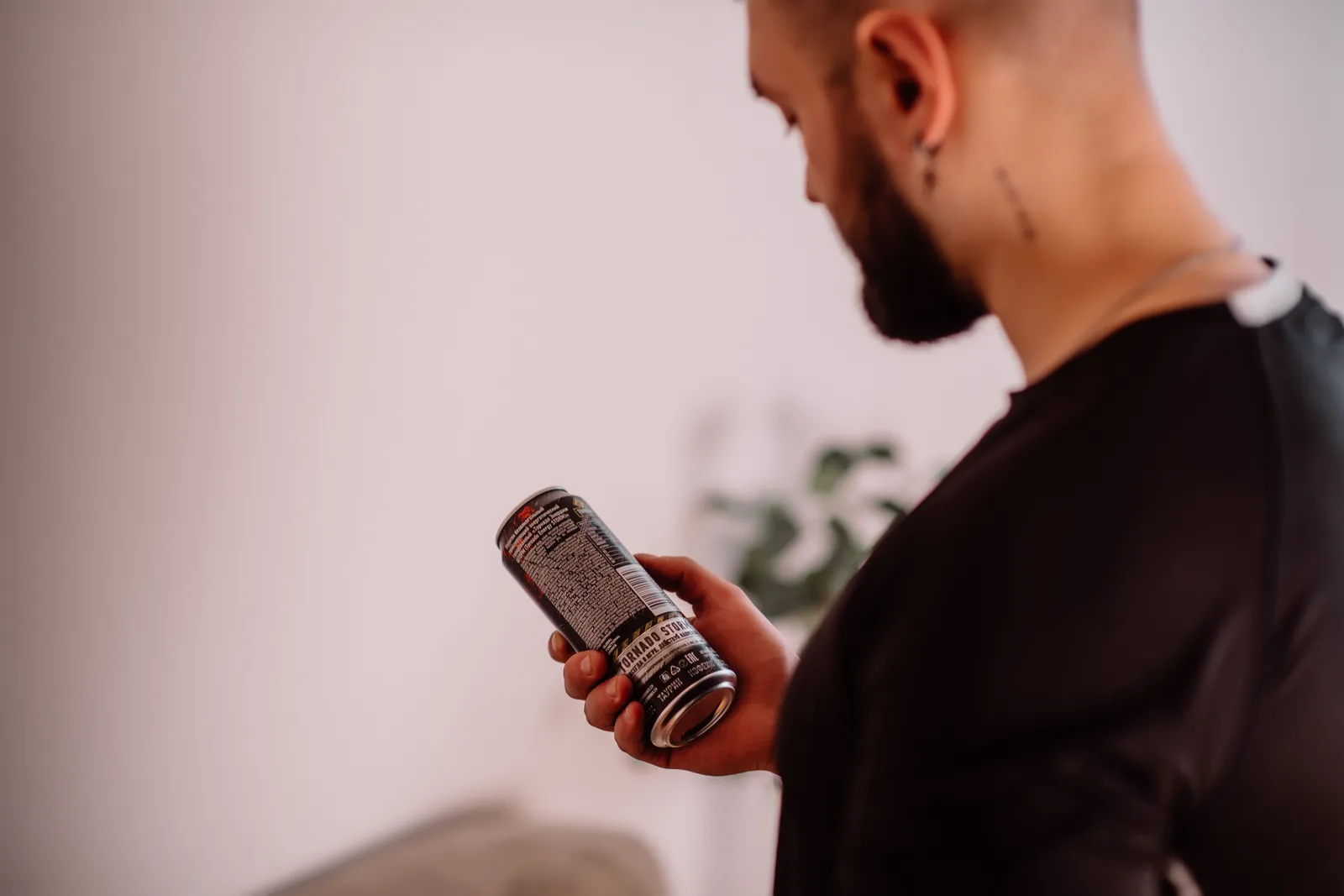
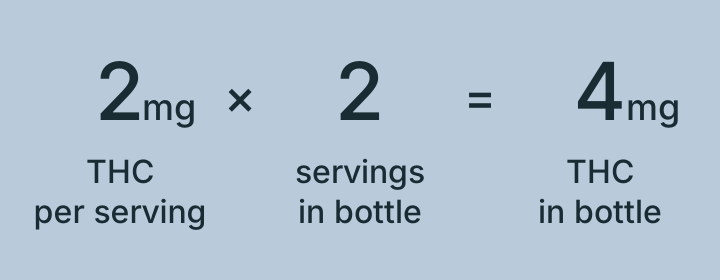
Check whether the amount is per serving or per container. Look for a serving size and the number of servings in the package. Fluid ounces describe the volume of drink; milligrams describe an ingredient amount. Keep those units separate, too. A larger container doesn't by itself tell you how much THC it contains.
Here's a hypothetical bottle: the label lists 2 mg THC per serving and two servings per bottle. Multiply those figures and the stated total is 4 mg THC in the bottle. This is an example of reading the numbers, not a description of the Cann can or a suggested amount to consume.
The same check applies to multipacks. Compare one can with one can, or a whole package with a whole package. If you can only find a front-of-pack number, leave the serving question open until you find the detail. Don't quietly assume that one bottle means one serving.
Read the ingredient panel
The ingredient list and an effect claim answer different questions. One describes the contents; the other makes a statement about what the product will do. Read them separately. An appealing flavor name or photograph of fruit gives you a starting point, but it can't stand in for the full panel.
Match the ingredient and nutrition information to the exact flavor and version you're looking at. Keep a photograph or link if you're comparing products later. That gives you something specific to return to, rather than a memory of the packaging. If the website and container disagree, ask the maker which information applies to that product.
An amount isn't an onset time
The CDC includes cannabis drinks in its guidance on edibles. It warns that delayed effects can lead people to consume more before they feel anything, increasing the risk of poisoning. It also identifies food, medications and alcohol among factors that can affect how long effects last. CDC: cannabis and poisoning
In a 2020 controlled study, 17 adults who used cannabis infrequently received brownies with placebo or 10, 25 or 50 mg THC in separate sessions. Reported effects peaked around 1.5 to 3 hours after ingestion. Those results do not establish the timing of this drink. Schlienz et al. (2020)
When a drink promises a fast onset, look for evidence about that particular formulation and what was actually measured. A study of a different product doesn't supply a personal countdown, and a marketing claim isn't a reliable signal to have more. The amount and the timing need their own explanations.
Read the ratio with its ingredients
A ratio needs the ingredient names in the right order. In the example above, four parts CBD to two parts THC simplifies to a 2:1 CBD-to-THC ratio. Reversing the names changes what you're describing. The ratio alone cannot predict how the drink will feel.
In a 2023 randomized crossover trial, 18 adults received placebo brownies, 20 mg THC brownies, or brownies containing 20 mg THC plus 640 mg CBD. The combination produced stronger reported effects and more impairment on some tasks. Participants also received other drugs, which may have influenced the results. These conditions cannot predict this can's effects. Zamarripa et al. (2023)
That is a reason to question a blanket promise that CBD always makes THC gentler. The CBD amount in that experiment was far higher than the amount listed on this can. Keep the actual amounts and preparation with the finding, rather than turning one result into a rule for every product.
Put the numbers in the right comparison
For the classic Cann example, the maker’s 8 fl oz specification states 2 mg THC and 4 mg CBD. Those remain separate amounts for the named version. A larger can or another product in the range needs its own information; the familiar branding does not preserve the same formula across every format.
When comparing a second drink, check whether its figure describes one serving or the entire container. Then examine the evidence for a timing promise separately. What a THC drink’s onset claim measures is a different question from how many milligrams the package declares. A correct label calculation cannot supply a personal countdown.
The checklist below gives each drink the same questions. If one answer is missing, describe the gap specifically rather than treating a slogan as its substitute. You can understand the available contents information without assuming the two drinks will produce the same experience.
The exact product, flavor and container size.
THC per serving and per container, where stated.
CBD or other named cannabinoids, with their own amounts.
The ingredient panel and evidence behind any effect claim.
Sources & review
Cann’s classic 8 fl oz amounts were freshly checked as manufacturer statements. The 17-adult 2020 and 18-adult 2023 studies used brownies, not this drink; peak timing and high-CBD conditions are not generalized to personal effects.
- Cann: classic product information
Manufacturer-stated contents; not an independent test or an endorsement.
- Schlienz et al. (2020)
Controlled oral-cannabis research. DOI: 10.1016/j.drugalcdep.2020.107969.
- CDC: cannabis and poisoning
Public-health guidance for cannabis-containing food and drinks.
- Zamarripa et al. (2023)
Randomized oral THC/CBD trial. DOI: 10.1001/jamanetworkopen.2022.54752.