
Cocoa percentage does not tell you THC strength
A darker chocolate and a higher-THC chocolate describe different things. Separate cocoa percentage, serving weight and cannabinoid amount.
 AfterloTHC
Two prominent numbers describe different ingredients
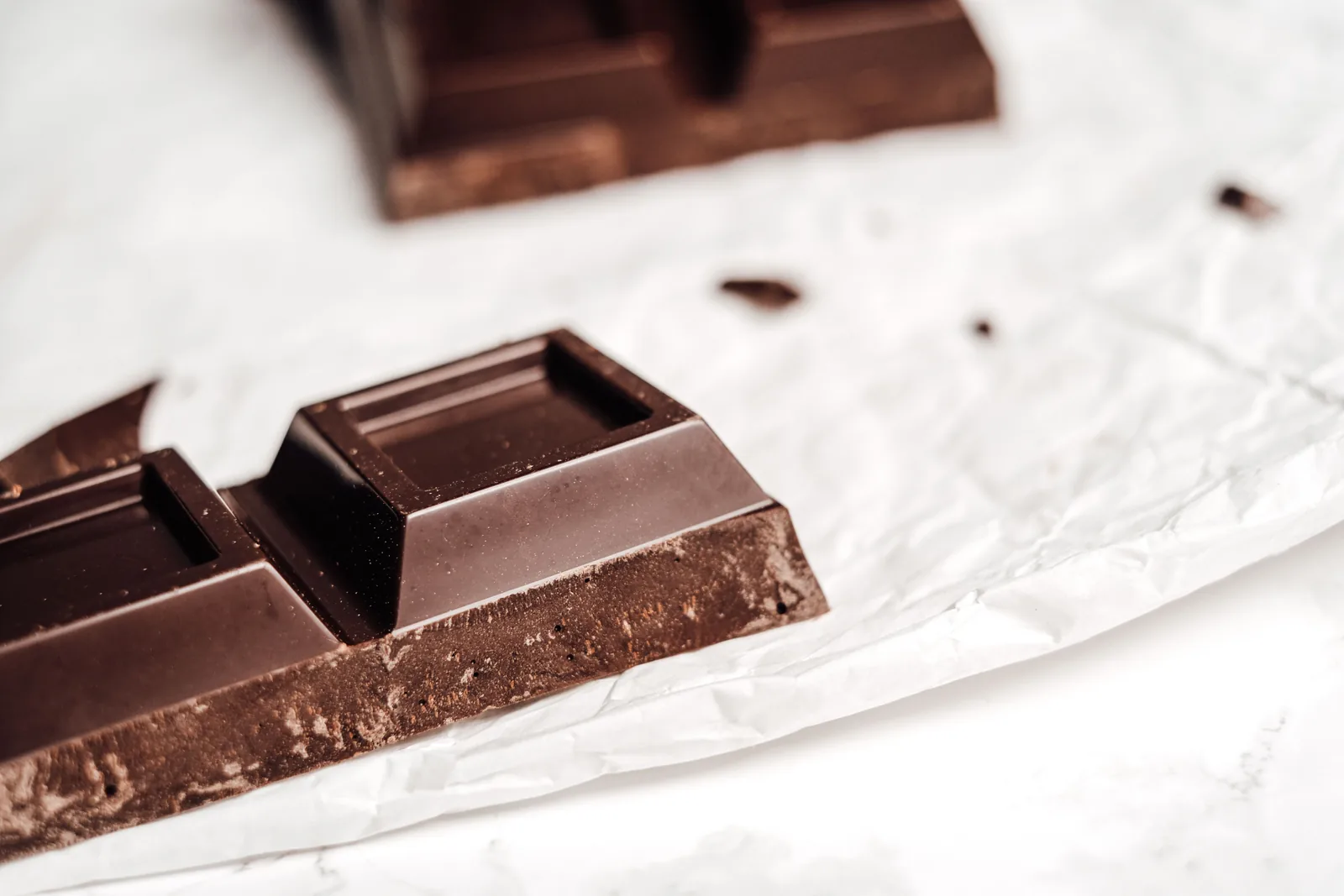
A cocoa percentage cannot be converted into THC content. The cocoa figure concerns the chocolate ingredients; the cannabinoid statement describes a different quantity. A bar marked 70% cocoa could carry a higher, lower or equal stated THC amount compared with another bar. The percentage alone does not decide it.
Before comparing products, copy the complete wording around each number. Check whether the THC amount is per portion, bar or pack, and find the maker's explanation of the chocolate description. A percentage without its ingredient context and a milligram figure without its serving basis are both incomplete records.
This is especially useful when products are described as dark, intense or rich. Those words can communicate a culinary style without measuring cannabis contents. A taste description is not a potency scale. The chocolate's flavor and the manufacturer's cannabinoid figures need their own sources, even when the campaign presents them together.
If a manufacturer defines what its cocoa figure includes, retain that explanation rather than assuming all percentages use the ingredient category you have in mind. The explanation can clarify the chocolate without answering a cannabinoid question. That leaves two separate statements, each available for the comparison it actually supports.
Two prominent numbers describe different ingredients.
Follow the cannabinoid statement separately
Kiva's Milk Chocolate page gives separate THC figures of 5 mg per serving and 100 mg per pack. It also lists chocolate ingredients and cannabis extract. The page cautions that amounts, ingredients and allergens can vary by state. Its displayed example shows why a chocolate description cannot replace the product's actual cannabinoid information. Kiva: Milk Chocolate product information
A hypothetical darker bar could contain the same stated THC amount as a milk-chocolate bar, or a different amount. The darkness alone would not resolve that question. The answer must come from the label or other relevant product documentation. Avoid turning a common association about flavor intensity into a statement about a different ingredient.
Keep other cannabinoids separate too. If a product includes CBD, its quantity does not become THC because the figures sit close together. A combined total may be useful when clearly described, but it does not replace the individual amounts. Preserve the ingredient names rather than reducing the package to one unqualified strength number.
Food weight and ingredient amount need different units
Metric prefixes explain the relationship between grams and milligrams: one gram contains one thousand milligrams. That does not make a bar's gram weight a cannabinoid quantity. Most of the chocolate's mass consists of its food ingredients. A cannabinoid statement concerns a named part of the formulation, not the entire weight of the bar. NIST: metric prefixes
For a hypothetical example, a 40 g bar with a separately stated 20 mg THC total would still weigh 40 g as food. The cannabinoid figure is not 20 g, and it is not a percentage of cocoa. These invented figures illustrate unit reading only. They are not a retail formulation, a preparation instruction or a suggested intake.
FDA's Nutrition Facts guidance keeps nutrient figures attached to the food serving. Use that same discipline when moving between panels: identify which serving each number describes. If one panel concerns a piece while another concerns the full package, resolve the difference before comparing the figures as though they share a basis. FDA: understanding Nutrition Facts
Cocoa does not provide a caffeine figure either
FDA identifies chocolate among familiar caffeine sources and explains that caffeine naturally present within an ingredient may not appear as a separate ingredient-list entry. A cocoa percentage therefore should not be treated as an exact caffeine amount. Look for product-specific information if caffeine is one of the details you need to understand. FDA: caffeine in food and drinks
That leaves several distinct records on one wrapper: the chocolate description, food serving, nutrient information, cannabinoid contents and any available caffeine information. Their proximity is not evidence that one predicts all the others. Compare the detail relevant to your question instead of borrowing a number from another category because it is easier to find.
The same applies to an evening or daytime product name. A suggested occasion is not a chemical analysis. If the maker promises a particular experience, find the evidence supporting that promise and the preparation it concerns. Neither cocoa language nor an ingredient amount alone establishes how a person will respond.
Compare two bars without mixing the measurements
Imagine hypothetical Bar A is described as 70% cocoa with 5 mg THC per stated piece. Bar B is described as 50% cocoa with the same 5 mg THC per stated piece. The cocoa descriptions differ, while the declared THC per piece matches. Neither figure tells you whether the pieces have the same food weight.
Next compare the serving descriptions and package totals. If one piece weighs twice as much, the per-gram comparison is different even though the per-piece THC amount matches. Our chocolate-serving guide explains how a food portion and its cannabinoid statement belong together.
Flavor words still matter for choosing a culinary style, but intense or rich is not a cannabis measurement. A full-spectrum claim adds another kind of description, not a shortcut between cocoa and THC. Give each statement its own meaning instead of using whichever number looks largest as a general strength score.
Sources & review
Sources identify their scope below. Manufacturer descriptions are attributed; hypothetical examples explain reading and arithmetic, without establishing an individual effect or consumption amount.
- Kiva: Milk Chocolate product information
Manufacturer ingredient and amount example. Page warns of state variation; its two serving-weight entries differ, so no single serving weight is inferred.
- NIST: metric prefixes
Unit-prefix definitions; calculations in these articles are our explicitly hypothetical examples.
- FDA: understanding Nutrition Facts
Serving, nutrient and Daily Value guidance; a food serving is not a consumption recommendation.
- FDA: caffeine in food and drinks
Caffeine sources and labeling guidance; not a personalized caffeine allowance.