
THC chocolate: what counts as one serving?
A scored square and a labeled serving are not automatically the same. Read the portion, the THC statement and the package total together.
 AfterloTHC
A scored bar still needs a serving description
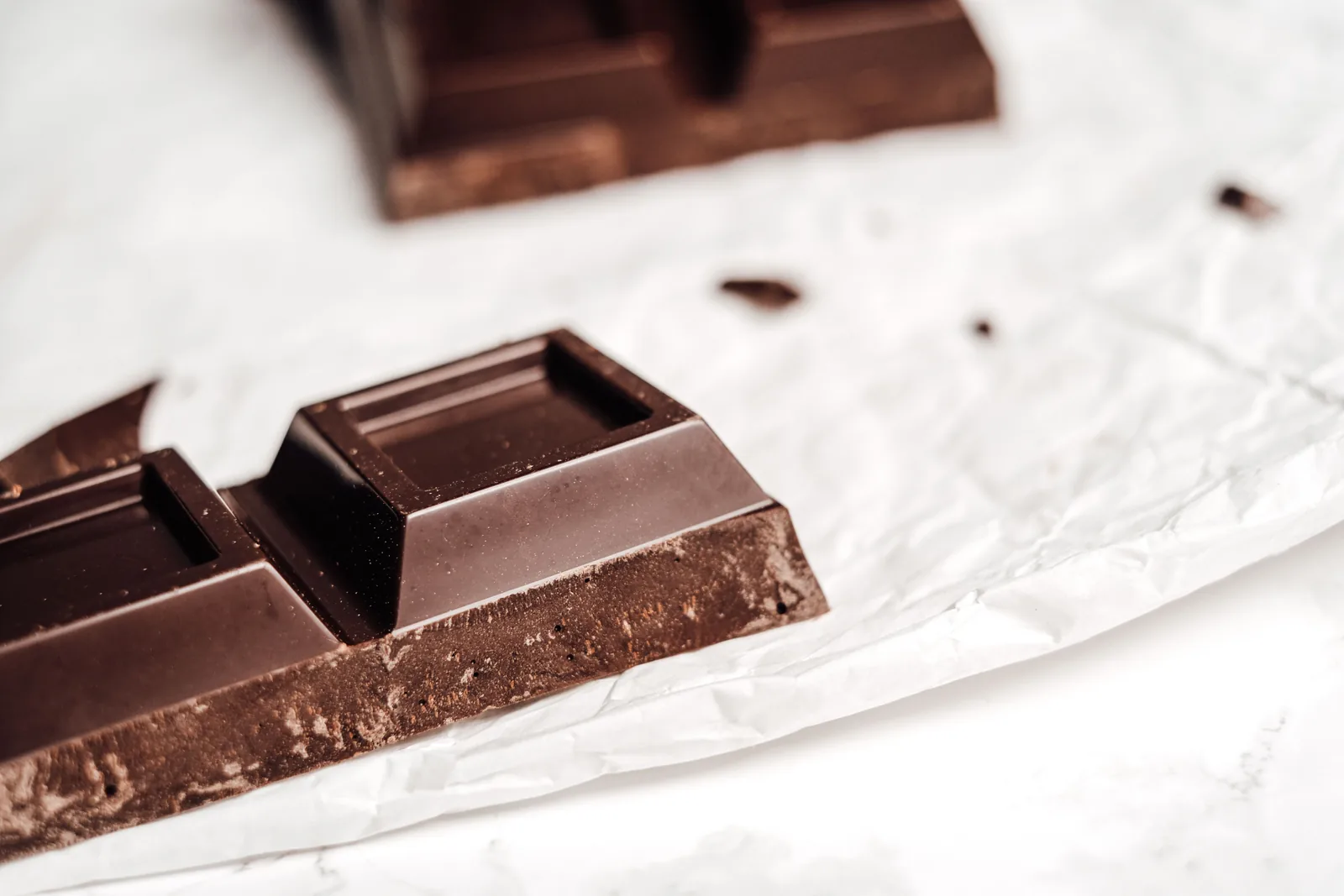
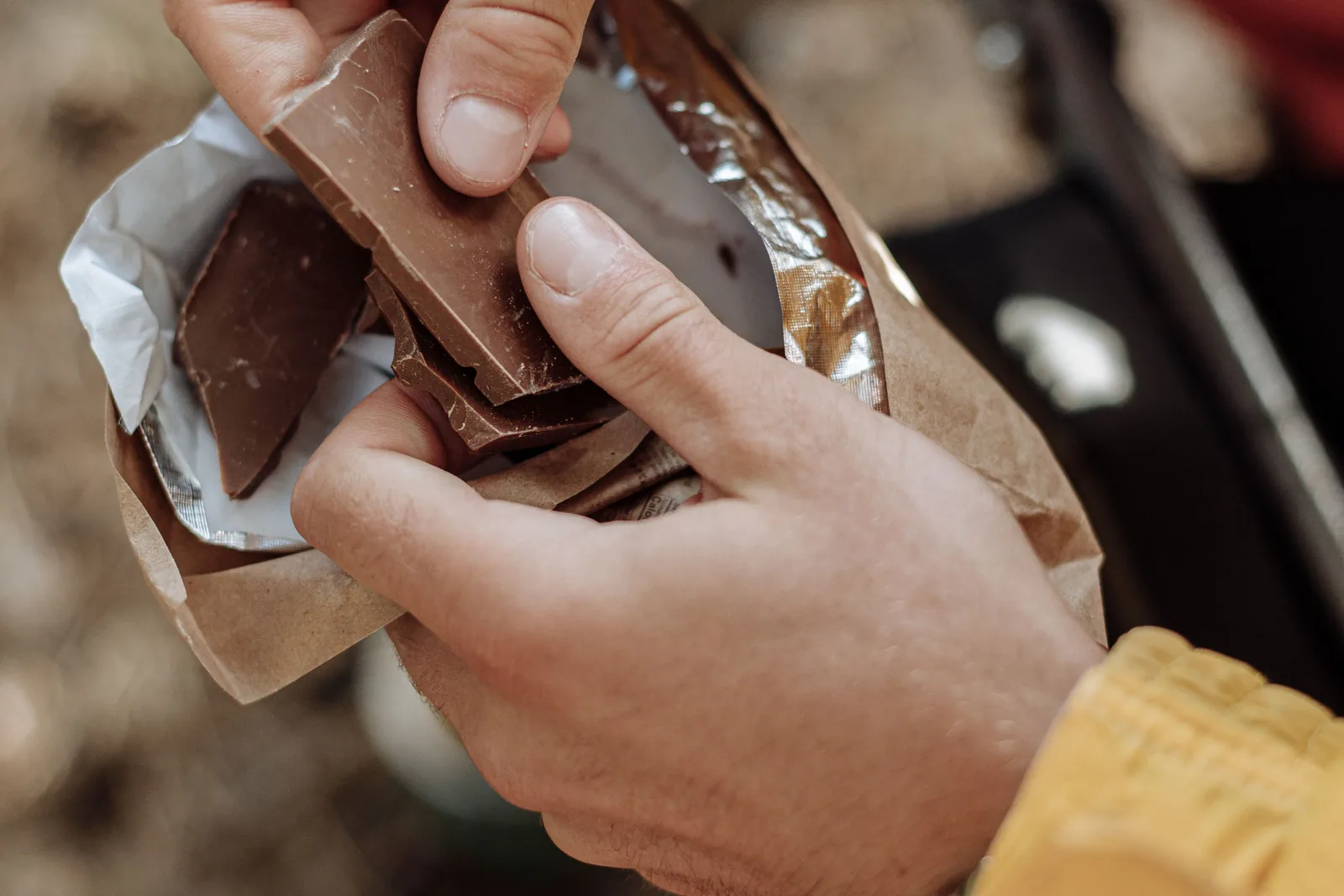
The wrapper defines the labeled serving; the grid pressed into the chocolate does not define it on its own. Find the piece description and THC amount, then check the package total. A neat square is a physical division, while a serving statement explains the manufacturer's quantity basis.
A bar can carry an ordinary food weight in grams, a THC amount in milligrams and a number of portions. Keep all three descriptions. The gram weight is not a cannabinoid amount, and the piece count is not an effect prediction. Those distinctions are easy to lose when only the most prominent number appears in a retailer's photograph.
Begin with the exact product and market. Chocolate products with similar branding can differ in ingredients, amounts and package layout. Information about another state or an older wrapper is useful only when its relationship to the current product is established. A recognizable logo cannot answer that question by itself.
A scored bar still needs a serving description.
Follow the manufacturer's stated figures
Kiva's Milk Chocolate page lists 5 mg THC per serving and 100 mg per pack. It also identifies 20 servings per package. Those manufacturer figures form a consistent relationship: twenty stated servings multiplied by five milligrams gives the stated package total. This describes the displayed example rather than every Kiva bar sold in the United States. Kiva: Milk Chocolate product information
The page explicitly cautions that products are made in the states where they are sold, and cannabinoid contents, ingredients and allergens may vary. Its nutritional table and product-information section also display different serving weights. Rather than selecting one weight and presenting it as settled, use the actual package and ask the maker which specification applies.
That is a useful distinction between checking arithmetic and verifying a product. The multiplication can be correct while a separate detail remains unresolved. Preserve both observations. Do not quietly attach a serving weight from one section to cannabinoid information from another when the source does not clearly establish that they refer to the same version.
If an online product view offers several regions, save the selected region as part of the source. A package photographed for one market may remain visible while surrounding information changes. The region is therefore part of identifying the example, rather than a minor detail to remove when making a summary.
Keep food information on its own basis
FDA's Nutrition Facts guide explains that nutrient quantities relate to the stated food serving and that a serving is not a recommendation about how much to eat. The number of servings changes how a package's nutrient totals are understood. That helps interpret a chocolate's food panel, without deciding an appropriate THC intake for an individual. FDA: understanding Nutrition Facts
Check whether the food panel and cannabinoid statement use the same portion. If one gives a full-package figure while the other uses a piece, keep the distinction visible. Do not assume neighboring information shares a denominator. A short note saying per piece or per pack is often enough to prevent an otherwise simple comparison from becoming misleading.
The same applies to a multipack. Count what the stated amount describes: one individually wrapped bar, several pieces or the outer package. The packaging hierarchy matters. A retailer's shortened title can omit it, so retain a photograph or manufacturer's record that shows the relevant units together.
Contents do not establish a personal response
CDC warns that effects from edible cannabis can be delayed and that people may consume more before noticing them. Duration can also be affected by circumstances. A chocolate serving description does not remove those uncertainties. Knowing the manufacturer's stated amount cannot establish an onset time, a predictable experience or an individual consumption recommendation. CDC: cannabis and poisoning
Nor does the bar's score pattern independently prove how a cannabinoid is distributed within it. Read the manufacturer's actual serving and testing information. Do not create a precision claim from the appearance of the molding alone, or assume that breaking a portion differently produces a measured result the company has not documented.
If a wrapper adds a promise about mood or speed, treat it as another claim with another evidence question. A clear quantity statement is useful, but it does not validate every adjacent word. Research needs to concern the relevant preparation and measured benefit rather than simply the broad category of cannabis edibles.
Follow the stated piece, not just the score line
Suppose a hypothetical bar has 20 equal marked pieces and states 100 mg THC per bar. If the label defines one piece as one serving, the stated arithmetic is 5 mg THC per serving. If it defines two pieces as a serving, the serving figure becomes 10 mg. The same printed grid can accompany different serving descriptions.
A laboratory result in mg per gram needs the serving weight before it can be compared with either statement. Our guide to chocolate batch tests works through that extra input. A row from an extract report cannot supply the contents of a finished square without a valid connection to the final product.
Photograph the cannabinoid and serving panels together if they conflict. That gives the maker an actual discrepancy to resolve. Do not treat a piece broken by eye, a melted bar or an unfamiliar serving-weight entry as a precise replacement for the original product statement.
Sources & review
Sources identify their scope below. Manufacturer descriptions are attributed; hypothetical examples explain reading and arithmetic, without establishing an individual effect or consumption amount.
- Kiva: Milk Chocolate product information
Manufacturer ingredient and amount example. Page warns of state variation; its two serving-weight entries differ, so no single serving weight is inferred.
- FDA: understanding Nutrition Facts
Serving, nutrient and Daily Value guidance; a food serving is not a consumption recommendation.
- CDC: cannabis and poisoning
Public-health guidance for edible cannabis, delayed effects and storage; not a trial of the featured product.