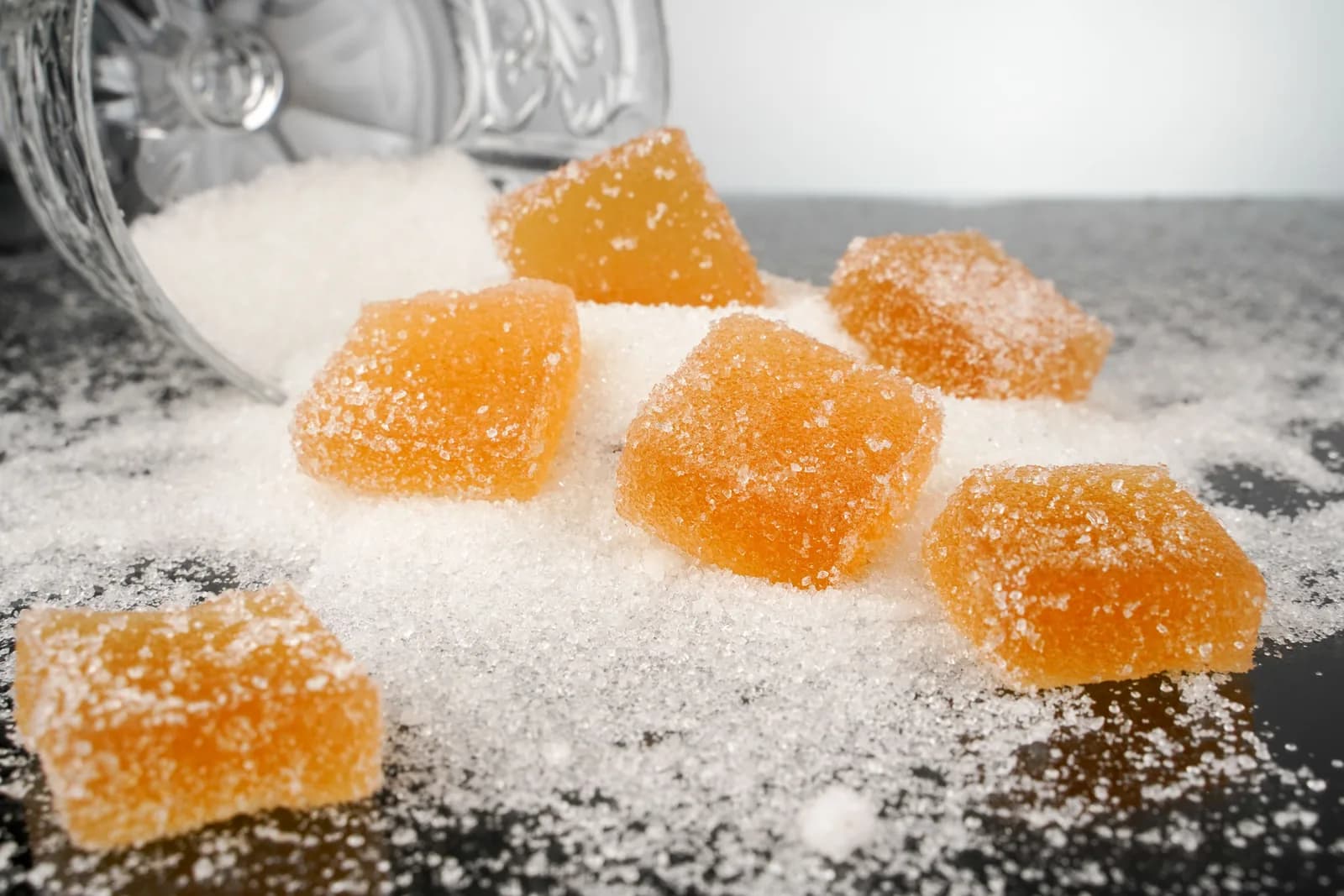

Amanita muscaria gummies: what the FDA says
FDA's food-use assessment and a warning letter raise distinct questions about Amanita muscaria products. Here is what those dated records cover.
 AfterloMushrooms
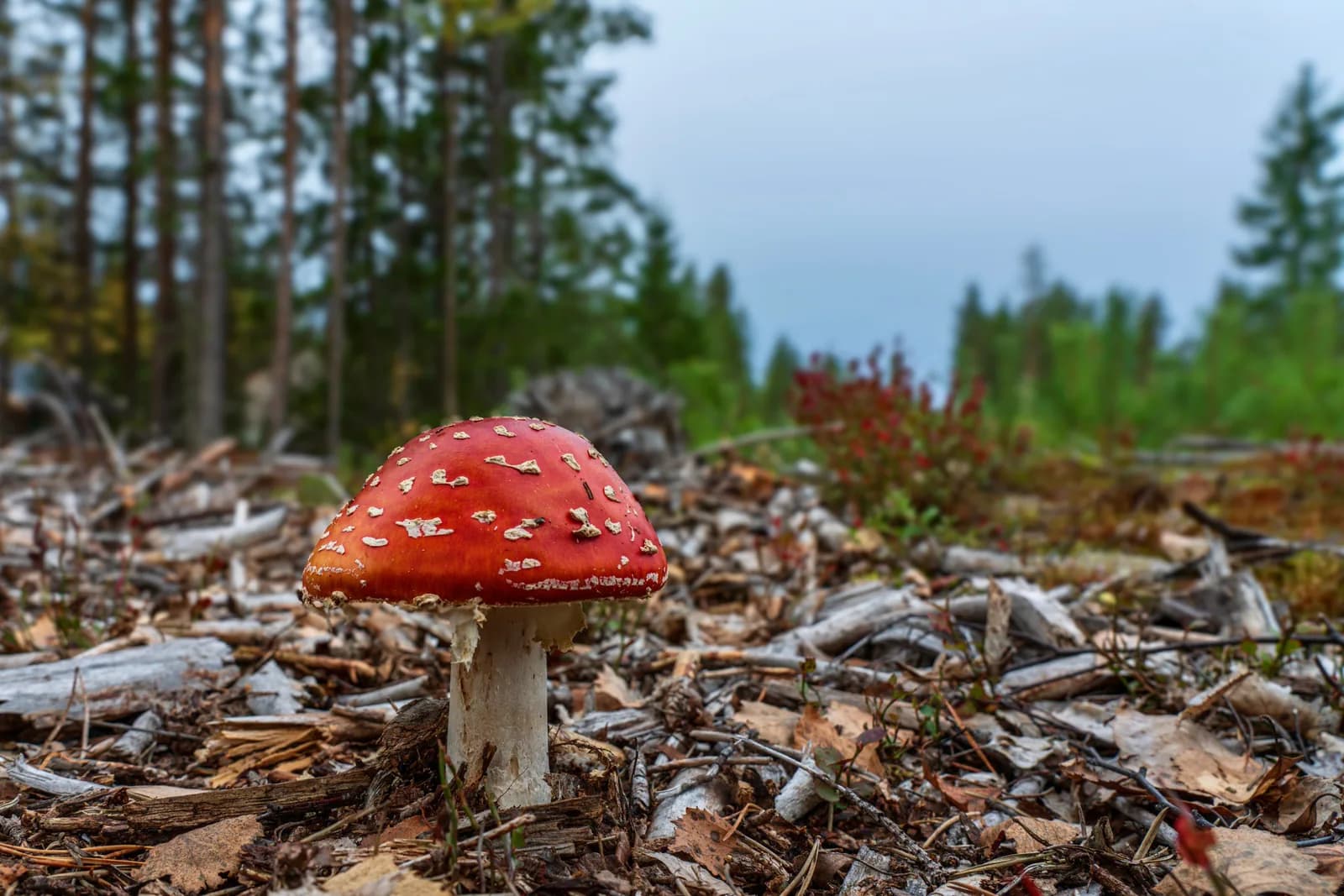
This is a different mushroom question
A gummy labeled Amanita muscaria does not belong in the same ingredient conversation as an identified lion's mane or reishi supplement. The shared word mushroom and the familiar candy shape can conceal that difference. Start with the exact name, rather than assuming the product is another version of the functional-mushroom products discussed elsewhere on Afterlo.
The distinction is important enough to answer plainly. A. muscaria is associated with psychoactive constituents and has been the subject of specific US food-safety action. Neither a small-looking gummy nor reassuring language such as natural or microdose establishes safety. This article explains the documents and terminology; it does not provide instructions for taking or preparing these products.
This is a different mushroom question
What FDA said about food use
In its 18 December 2024 update, FDA said A. muscaria, its extracts and specified constituents were not authorized ingredients in conventional foods. The agency concluded that the assessed uses did not meet its food-safety standard and recommended avoiding foods containing them. This is a food-ingredient assessment, not a shorthand answer to every state's drug laws. FDA: Amanita muscaria in conventional foods
That last distinction matters when a retailer uses the word legal. A claim about a substance's status under one law does not answer whether it is authorized as a food ingredient. Look at which legal question the statement addresses, and which authority issued it. An online checkout cannot establish either answer for the place where you live.
The agency's update names muscimol, ibotenic acid and muscarine. Do not treat those names as interchangeable with psilocybin or with the mushroom's scientific name. Different substances require their own descriptions. A front panel that uses only a broad mushroom phrase leaves the actual contents particularly hard to interpret.
A label is not an independent analysis
A CDC MMWR investigation published in July 2024 described hospital evaluations after mushroom-gummy ingestion in Virginia and testing of five brands. Some samples contained substances not declared on their labels. Its small selected sample does not tell us the prevalence of undeclared ingredients across today's entire gummy market. CDC MMWR (2024): analysis of selected mushroom gummies
The useful lesson concerns identification. A label states what a seller declares; a laboratory tests a particular sample using particular methods. One cannot substitute for the other. Do not assume a familiar drawing proves a species, or that an ingredient omitted from the label must be absent from an untested product.
It is equally important not to widen a named investigation into a claim about every mushroom. Cultivated oyster mushrooms, a defined lion's mane ingredient and a psychoactive edible sold under vague language are different subjects. A careful article can take the reported illnesses seriously without erasing those distinctions.
Do not merge separate events into one package history. The Virginia investigation, the Diamond Shruumz recall and a later warning letter concern different records. Checking a mushroom-product recall requires the exact brand and coverage in that notice. A shared year, candy format or mushroom word does not establish that the investigators tested the product you have.
Supplement wording does not end the question
FDA's September 2025 letter to Blue Forest Farms addressed named Amanita products represented as supplements as well as a chocolate represented as conventional food. The agency described inadequate safety information for the supplement ingredient and a separate food-additive issue for the chocolate. This is a dated finding about identified products, not a report of the company's current response. FDA: Blue Forest Farms warning letter, September 2025
A Supplement Facts heading is therefore not a simple escape from the ingredient question. The product's representation and actual use matter. Read the agency's explanation before turning a panel heading into a claim of approval. Afterlo has not made a current legal determination about an unnamed product or reviewed every jurisdiction.
When comparing documents, distinguish an agency alert, a warning letter, a recall and a seller's reply. They have different dates and purposes. Save the original agency link so you can check for an update, rather than relying on a copied headline that no longer shows the scope or later information.
What to do with an unresolved product
If you cannot establish what a product contains, do not experiment with it to settle the question. Keep it away from children and other people who might mistake it for ordinary candy. Follow any applicable agency recall instructions. If someone becomes unwell after consuming it, seek prompt medical help and retain the packaging for the people providing care.
For an inquiry, identify the maker, product, flavor, batch and purchase source, with photographs of the complete label. The guide to finding the company behind a label can help distinguish a retailer from the named manufacturer or distributor. Those details help connect an item to an actual notice. They cannot turn an unidentified confection into a product with established contents or suitable use.
Sources & review
US FDA food-use assessment and dated FDA/CDC investigations re-read on 27 October 2026. No safe amount, preparation method, current market prevalence or nationwide legal clearance is supplied.
- FDA: Amanita muscaria in conventional foods
18 December 2024 constituent update, rechecked 27 October 2026. FDA food-ingredient assessment; not a declaration of every jurisdiction's drug law.
- CDC MMWR (2024): analysis of selected mushroom gummies
Five-brand Virginia investigation and limited analytical panel, not current market prevalence. Read investigation, table and limitations, 27 October 2026.
- FDA: Blue Forest Farms warning letter, September 2025
Named-product enforcement letter distinguishes conventional chocolate from products represented as supplements. Dated agency findings, not a new market-wide investigation or a report of the firm's current response.
- FDA: Diamond Shruumz investigation
Dated 2024 investigation/recall evidence for named products; not a finding about all mushroom products or a current market-wide alert.