
THC gummies with CBD, CBN or CBG: reading the blend
A gummy may list THC alongside CBD, CBN or CBG. Check each amount and whether the research tested those ingredients together.
 AfterloTHC
Start with the individual cannabinoids
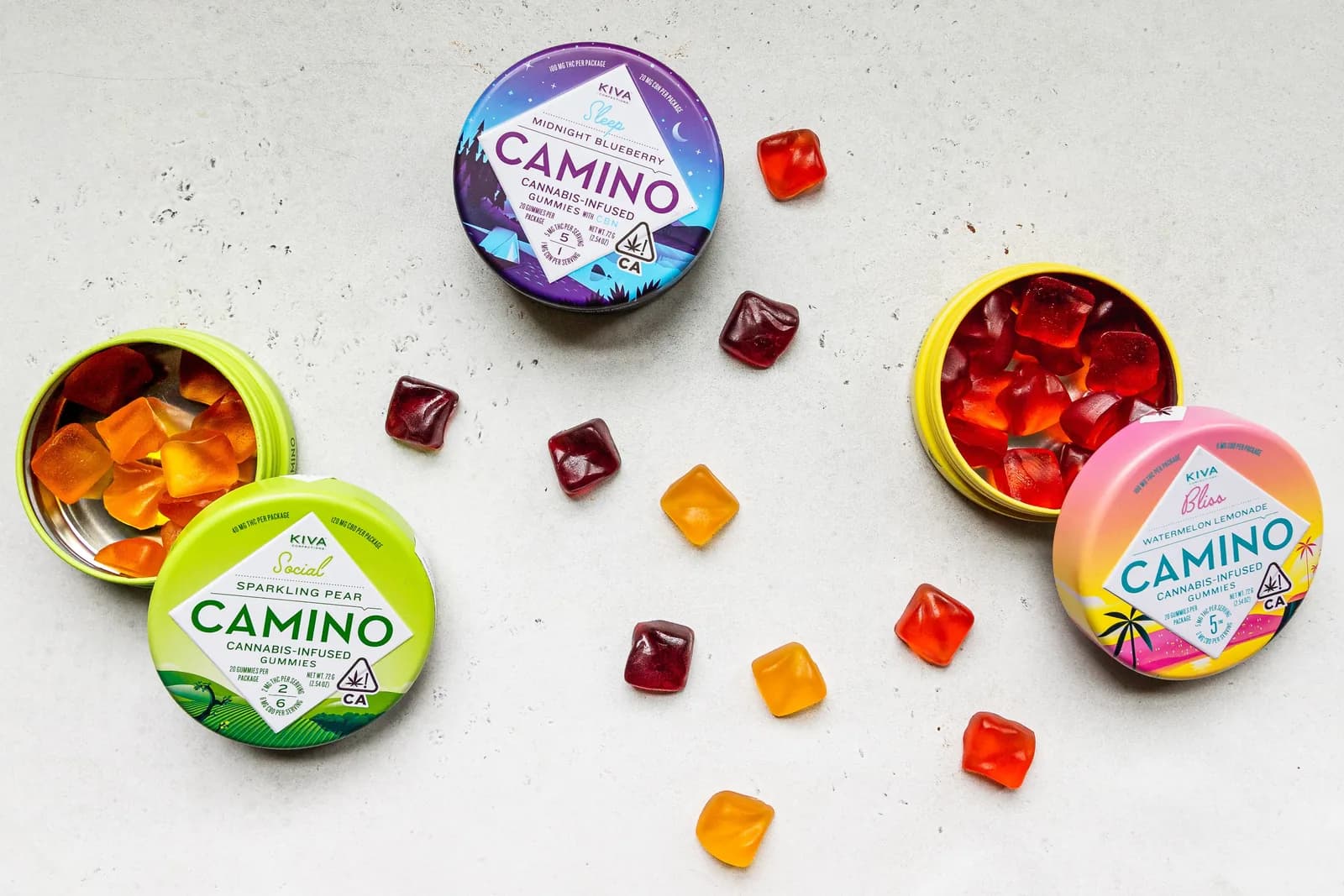
CBD, CBN and CBG are different cannabinoid names. When they appear beside THC on a gummy, the useful first task is to find how much of each is stated per piece or serving. A combined total can hide very different formulas. A front panel saying cannabinoid blend does not give you the same information as separate ingredient amounts.
For a hypothetical gummy labelled 5 mg THC, 5 mg CBD and 2 mg CBN per piece, those are three different quantities. Adding them gives 12 mg of named cannabinoids, not 12 mg THC. The total does not make the ingredients interchangeable, and it cannot be used as a scale that ranks how the gummy will feel.
Write the names into any comparison, especially when the package uses a three-part ratio. A bare 2:1:1 leaves the order unresolved. Our explanation of CBD-to-THC ratios shows why a relationship needs both names and an amount basis before it becomes useful product information.
Does the evidence describe this combination or just one ingredient?
CBD does not erase the THC statement
FDA identifies THC and CBD separately in its cannabis questions and answers. A product containing both still contains THC. Treating the CBD number as a subtraction from the THC number invents a calculation the ingredient statement does not provide. FDA: cannabis and cannabinoid questions
In a 2023 crossover study with 18 completers, a high-CBD/high-THC brownie produced more pronounced effects and impairment than the THC-only comparison. Both conditions also involved a drug-probe cocktail. The authors highlighted the specific amounts and study context as limits. This is not a test of a typical retail gummy, but it challenges the blanket assumption that CBD always softens THC. Zamarripa et al. (2023): oral THC and CBD
That does not tell you how every other ratio behaves. It shows why a reassuring formula such as CBD balances everything needs evidence for its own conditions. Increasing the number of ingredients does not remove the need to examine the product's THC content and warnings.
Read the advertised outcome carefully
A sleep-themed name is not a result from a sleep trial. The same is true of focus, calm or recovery written across a package. An ingredient may be under study without every food containing it having been tested. The named population, formulation, comparison and outcome determine what the research can support.
The published abstract of the 2026 CUPID CBN trial describes 20 adults with insomnia in a single-night crossover study. CBN did not significantly improve the primary measure, wake after sleep onset, versus placebo, while some secondary outcomes changed. That is a particular result in a small study, not a test of a THC/CBN gummy or proof that every possible CBN preparation has no effect. Lavender et al. (2026): CBN and insomnia
A small 2024 CBG field trial used a tincture in cannabis-experienced adults. That preparation and setting differ from a THC-containing gummy. Its results cannot simply be pasted onto the gummy's front-label promise because the two products share the letters CBG. Cuttler et al. (2024): acute CBG field trial
Find out whether the finished blend was tested
A product page can make a claim look well supported by linking three papers, one for each ingredient. Those papers may still leave the combined product untested. Read the methods of the study that is supposed to support the actual claim, rather than counting the links.
For example, research on one isolated cannabinoid would not establish what happens when it is combined with THC, another cannabinoid and a different food matrix. Nor does a study of a single exposure answer a claim about nightly use over months. These are differences in the research question, not small footnotes to ignore.
A helpful manufacturer response identifies the finished formula or explains exactly which study material matches it. If the evidence is for an ingredient alone, that can still be described accurately. It should not quietly become a trial of a retail product that never appeared in the study.
Also check whether the research measures a symptom score, a laboratory signal or an everyday task. A change on one questionnaire is not automatically a change in sleep duration, driving ability or work performance. The outcome in the paper should have the same name when it is described on a product page. Otherwise a limited observation can become a much larger promise during the retelling.
Compare the formulas before the mood names
Imagine two hypothetical sleep-labelled gummies. Both state 5 mg THC per piece. One also declares 2 mg CBN; the other declares 5 mg CBD and does not state CBN. They are not matching formulas. A shared nighttime design does not make their ingredients or evidence equivalent.
A useful comparison records the separate amounts, piece or serving basis, complete ingredient list and research actually connected to each claim. It also leaves room for a simple decision: a person can understand the formula without choosing to use it. No amount of attractive blend language makes a personal benefit predictable from the front of the pack.
Sources & review
Research findings, manufacturer statements and hypothetical examples are distinguished in the text. State-specific guidance is identified where used.
- FDA: cannabis and cannabinoid questions
Question 1 identifies THC and CBD. No nationwide retail availability, dosing or safety claim is inferred.
- Zamarripa et al. (2023): oral THC and CBD
Eighteen-adult crossover brownie trial with high CBD exposure and a drug-probe cocktail; not a retail-product effect prediction. DOI: 10.1001/jamanetworkopen.2022.54752.
- Lavender et al. (2026): CBN and insomnia
Published abstract: 20 adults, single-night crossover CBN trial; primary wake-after-sleep-onset result was not significant, while some secondary outcomes changed. Not a THC-gummy trial. DOI: 10.1111/jsr.70284.
- Cuttler et al. (2024): acute CBG field trial
Small remote crossover study of a CBG tincture in cannabis-experienced adults. Its preparation and outcomes cannot validate a THC/CBG gummy. DOI: 10.1038/s41598-024-66879-0.