
What a 30:1 CBD-to-THC ratio means
A 30:1 CBD-to-THC ratio means thirty parts CBD to one part THC. The individual amounts tell you how much of each is in the bottle.
 AfterloTHC
Put the ingredient names in order
A 30:1 CBD-to-THC ratio means thirty parts CBD for one part THC on the stated basis. Reverse the ingredient order and you have described a different formula. The ratio also cannot tell you the bottle's total contents: 30 mg CBD with 1 mg THC and 300 mg CBD with 10 mg THC share the same relationship.
Then find the individual quantities. A ratio describes a relationship, not an absolute amount. Two hypothetical bottles can share a 2:1 CBD-to-THC ratio while containing different totals and concentrations. That is why a ratio cannot replace the stated cannabinoid amounts or the volume of liquid to which those amounts apply.
If the front label uses a product name containing numbers, find the manufacturer's explanation before treating it as a ratio. A number might describe the entire bottle, a product line or a particular ingredient. Read the surrounding words and keep the explanation with the exact version rather than relying on the most familiar interpretation.
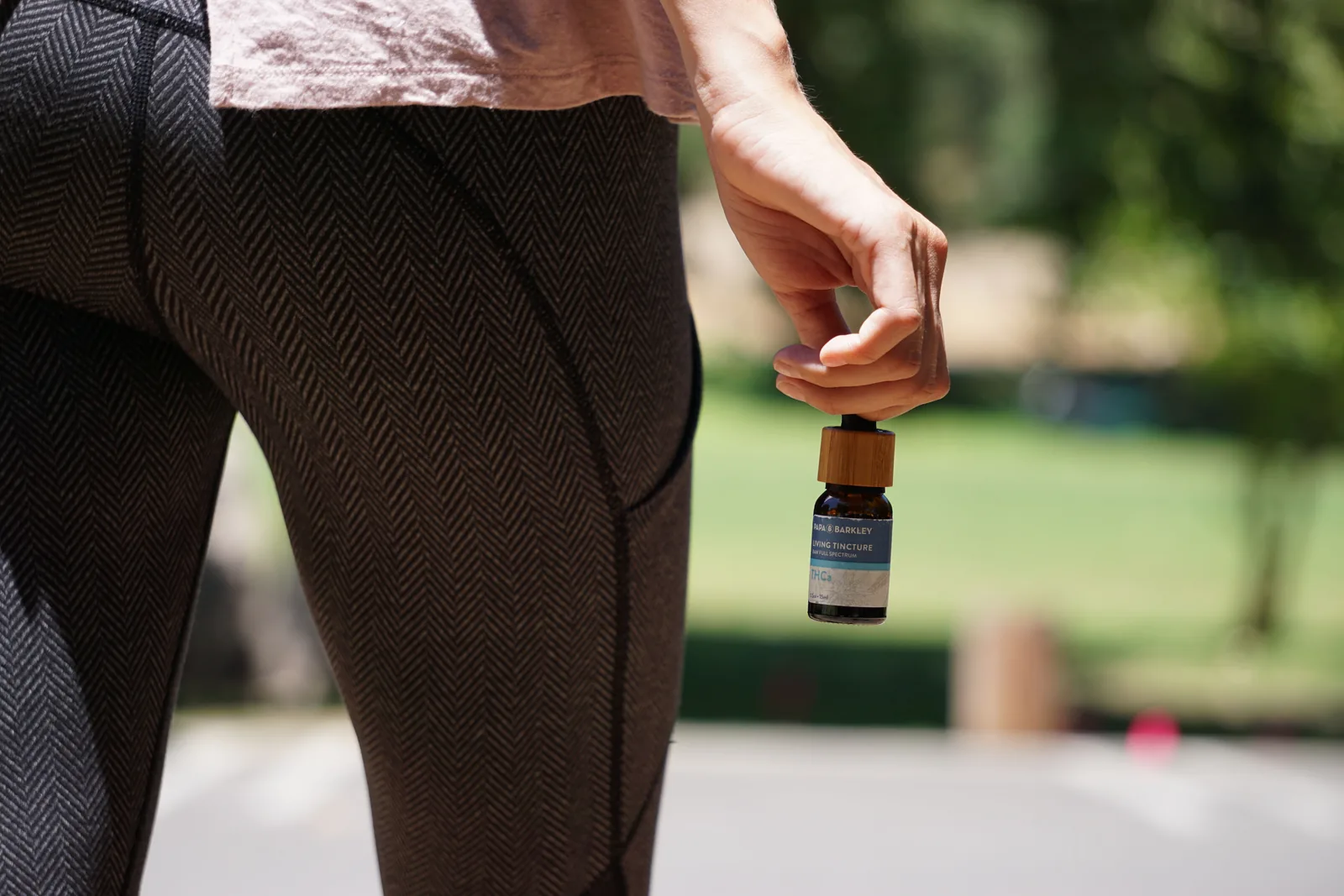
For example, an unexplained 3:1 on a cropped photograph leaves two questions open: which ingredient is first and what quantities are involved? Finding the full label resolves a different task from merely recognizing the ratio notation. Keep both answers before carrying the number into a comparison.
Put the ingredient names in order.
Follow a documented example
Papa & Barkley's 30:1 Releaf Tincture page identifies the product as CBD-dominant. It lists 900 mg CBD and 30 mg THC for the 30 mL format. Dividing both cannabinoid amounts by 30 gives the stated 30:1 relationship. The maker also lists a smaller bottle and cautions that exact cannabinoid contents vary by batch. Papa & Barkley: 30:1 Releaf Tincture
The arithmetic helps you read the manufacturer's figures; it does not independently verify them. Nor does it establish that every bottle displaying 30:1 contains the same amounts. Preserve the bottle size, the source and any batch information. Those details distinguish a real product record from a shorthand description shared between friends.
Notice the combined total too. Adding the two cannabinoids would describe their combined stated mass, rather than the THC mass. Keep the individual lines even if the maker prints a larger combined number elsewhere. Removing those lines would lose the very distinction the ratio is meant to communicate.
A ratio is not an effect guarantee
A 2023 randomized crossover study gave 18 adults placebo brownies, brownies containing 20 mg THC, or brownies containing 20 mg THC plus 640 mg CBD. Under those experimental conditions, the combination produced stronger reported effects and more impairment on some tasks. Participants also received a drug-probe cocktail, which limits interpretation. Zamarripa et al. (2023): oral THC and CBD
That experiment does not predict the response to this tincture. Its amounts, preparation and conditions differ, and the study did not test the Papa & Barkley retail product discussed here. It does provide a reason to question a blanket promise that adding CBD always makes THC gentler. Keep the actual conditions beside the finding instead of replacing them with a simple slogan.
Neither a high-CBD label nor an attractive ratio can establish how a particular person will feel. An ingredient relationship does not measure an individual's response. When a page moves from contents to an effect promise, look for evidence supporting that promise rather than assuming that the numerical relationship supplies it automatically.
Compare ratios on matching bases
Write the ratio in words first, then record the individual amounts per serving or per bottle. Compare like with like. If one product lists a container total and another lists a serving amount, resolve that difference before interpreting the ratio. Otherwise, a formatting difference can look like a chemical difference when it is only a difference in presentation.
A hypothetical bottle with 60 mg CBD and 30 mg THC has the same 2:1 relationship as a hypothetical serving with 2 mg CBD and 1 mg THC. Those examples explain arithmetic only. They do not establish equivalent products, equivalent experiences or an amount to consume. Formulation and context remain separate information.
The FTC's research guidance asks whether evidence fits the advertised formulation and benefit. Apply that question when a ratio is used to imply balance, calm or predictability. A claim about contents can be checked against a label; a claim about an effect needs evidence that actually measures the effect under relevant conditions. FTC: Health Products Compliance Guidance
Test the relationship against the amounts
A hypothetical label stating 90 mg CBD and 3 mg THC in the same bottle has a 30:1 CBD-to-THC relationship. A label stating 90 mg combined cannabinoids cannot be separated into those two figures unless the ratio order and total's meaning are both established. The arithmetic depends on the definitions beside the numbers.
For a real comparison, place each named amount on the same basis: per mL, per stated serving or per complete bottle. Do not compare one brand's bottle total with another's quarter-milliliter figure. Our oil-concentration guide shows why equal ratios can still accompany different concentrations.
A ratio is also not a promise of a particular mood or freedom from impairment. Other cannabinoid blends need the same care with names and amounts. Once the relationship is clear, it can help describe a formula; it cannot replace evidence about the preparation or establish an appropriate personal amount.
Sources & review
Sources identify their scope below. Manufacturer descriptions are attributed; hypothetical examples explain reading and arithmetic, without establishing an individual effect or consumption amount.
- Papa & Barkley: 30:1 Releaf Tincture
Maker's stated ingredients, bottle formats and cannabinoid amounts; batch-specific label remains important. Effects and administration suggestions are not adopted.
- Zamarripa et al. (2023): oral THC and CBD
Eighteen-adult crossover brownie trial with high CBD exposure and a drug-probe cocktail; not a retail-product effect prediction. DOI: 10.1001/jamanetworkopen.2022.54752.
- FTC: Health Products Compliance Guidance
Staff guidance on relevant and adequate evidence; not a legal verdict about any featured brand.