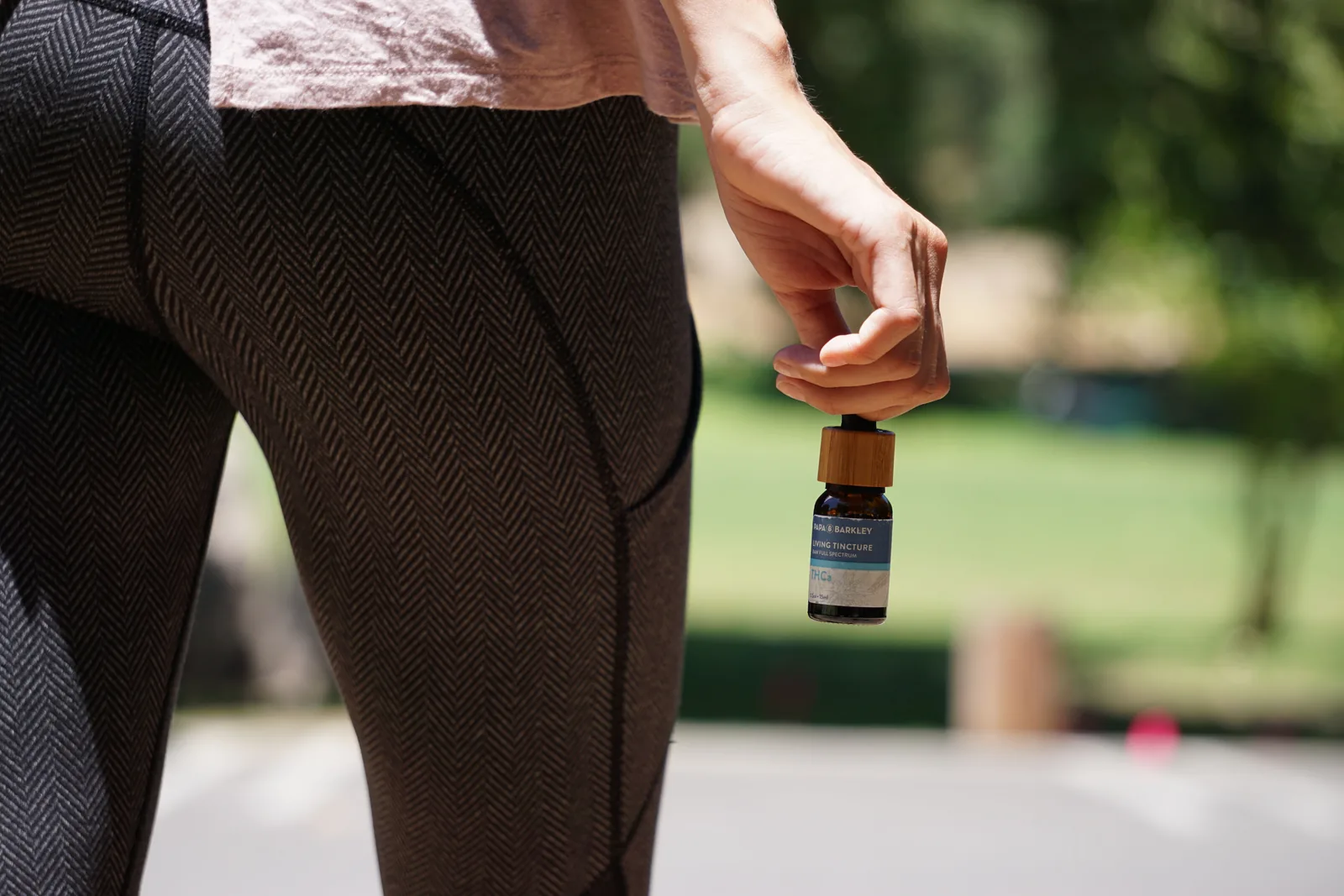

THC oil droppers: what the mL markings mean
The mL line measures liquid volume. To relate that amount to THC, you also need the concentration stated for the bottle.
 AfterloTHC
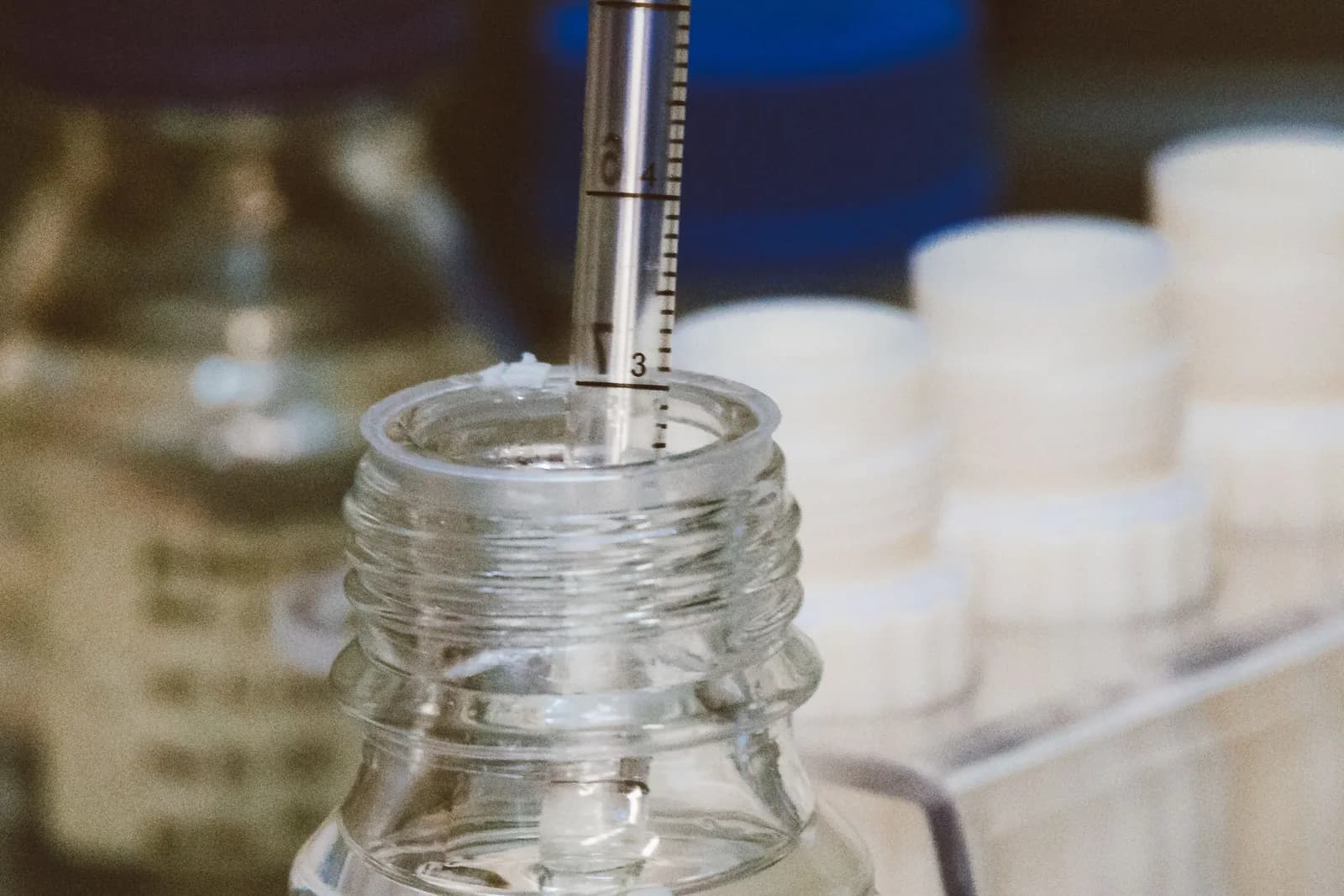
The line on the glass measures volume
A milliliter is a volume, not a THC amount. A line marked 0.5 mL on a dropper describes a quantity of liquid. To relate that quantity to the label's stated cannabinoid content, you also need the concentration of the liquid in the bottle. Reading one without the other leaves half the calculation missing.
NIST's metric-prefix guide defines milli as one thousandth. Milliliters and milligrams therefore share a prefix but describe different quantities: volume and mass. The similarity in the words does not make the units interchangeable. NIST: metric prefixes
Before doing arithmetic, read the marking itself. A printed 0.5 beside an mL label has a different meaning from an unlabelled line or a statement printed on the box. The dropper's maximum marked capacity also need not be the amount actually drawn into it. In a product description, the word dropperful needs an explained volume before it can be used as a measurement.
What does this line measure, and which bottle does it belong to?
Work through an example on paper
Consider a hypothetical bottle whose label states 300 mg THC in 30 mL of liquid. Dividing 300 mg by 30 mL gives a stated concentration of 10 mg THC per mL. In that example, the label arithmetic associates 0.5 mL with 5 mg THC. This demonstrates units; it is not a suggestion about an amount to consume.
Now imagine a second bottle with the same 30 mL volume but 150 mg THC. Its stated concentration is 5 mg per mL. A 0.5 mL mark has not changed its volume, yet the label arithmetic now describes 2.5 mg THC. The glass line cannot identify which formula is in the bottle.
Our guide to THC oil concentration works through bottle totals in more detail. The important habit is to write the cannabinoid name after the number. If the large figure combines CBD and THC, dividing that combined figure by volume does not give THC concentration on its own.
For a written comparison, make the column heading mg THC per mL, not simply strength. That gives the result a name and prevents a liquid volume from being mistaken for a cannabinoid quantity when you revisit it.
Match the tool to the bottle
Papa & Barkley's 30:1 Releaf page gives both bottle totals and a 0.25 mL serving statement, and notes that cannabinoid content varies by batch. Its figures illustrate why a specified volume and named cannabinoids are useful together. The maker's administration and effect claims are separate from that arithmetic. Papa & Barkley: 30:1 Releaf Tincture
A replacement dropper, an old cap or a measuring tool from another product should not be assumed to carry the same interpretation. If the original tool is lost or the scale is unreadable, the manufacturer can identify the intended replacement. Guessing from the length of the glass tube is not a reliable way to recover the missing measurement.
Neither the appearance of the oil nor the size of the bottle supplies that answer. A compact bottle might hold a concentrated formula or a dilute one. A longer dropper might simply fit a taller bottle. The useful correspondence is between the actual product statement and the actual marked unit.
Why counting drops does not solve a missing scale
A drop is not a substitute for a marked volume. A bottle that describes milliliters has not supplied a fixed conversion merely because its cap ends in a narrow tip. Without a product-specific, supported conversion, an assumed number of drops per milliliter introduces another unknown into the calculation.
This is particularly easy to miss when reading older notes. A sentence such as half a dropper contains five might omit both the liquid volume and the ingredient. It cannot be reliably applied to a different bottle. Write the units in full when comparing products, so a remembered phrase does not become a different formula by accident.
If the printed scale and directions seem inconsistent, quote both to the maker. Include the bottle size, formulation and batch. A useful answer should identify the volume meant by its directions, rather than asking you to infer it from a product photo.
Measurement does not establish a personal response
The calculation stops at the label's contents. It does not establish absorption, a suitable personal amount or when effects will begin. Those questions involve the particular preparation and person. A smaller line on a dropper cannot turn a THC-containing product into a non-intoxicating one.
California DCC's manufactured-product checklist treats product directions and cannabinoid information as separate label requirements. That state-specific structure is helpful here: the volume calculation does not replace instructions, warnings or a clinician's advice about medicines and health conditions. California DCC: manufactured-product labels
If you can identify the unit, the named cannabinoid, the concentration and the matching tool, you can explain the arithmetic clearly. If one is missing, identify that particular gap before making a comparison. A precise-looking decimal cannot repair a measurement that was never supplied.
Sources & review
Research findings, manufacturer statements and hypothetical examples are distinguished in the text. State-specific guidance is identified where used.
- NIST: metric prefixes
Unit-prefix definitions; calculations in these articles are our explicitly hypothetical examples.
- Papa & Barkley: 30:1 Releaf Tincture
Maker's stated ingredients, bottle formats and cannabinoid amounts; batch-specific label remains important. Effects and administration suggestions are not adopted.
- California DCC: manufactured-product labels
California-specific guidance on contents, batch identifiers, dates and directions. It does not describe the rules in every U.S. state.